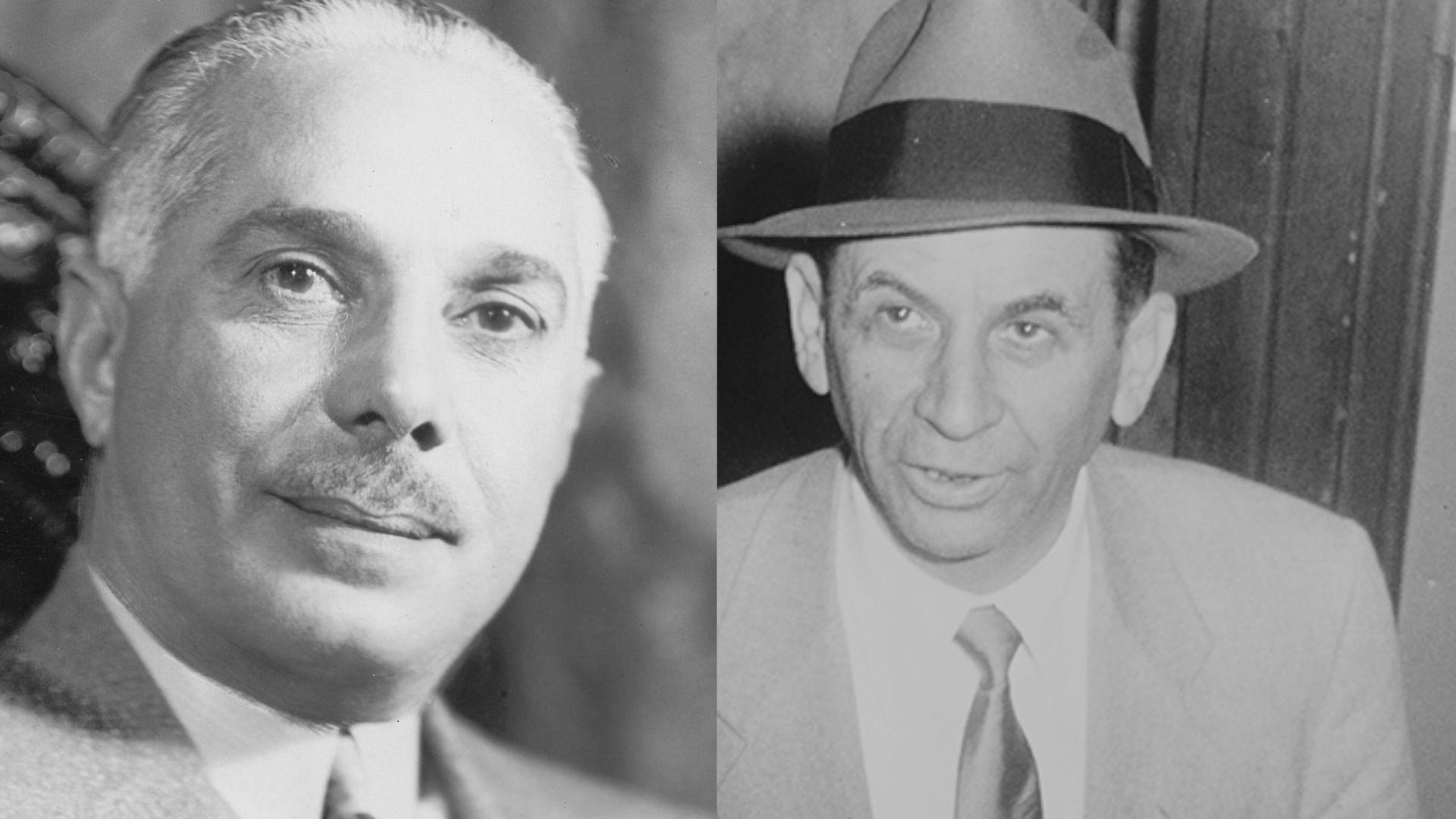
Dictator Rafael Trujillo and the Mob
Rafael Trujillo ruled the Dominican Republic with absolute power from 1930 until his murder in 1961.

A new wave of leaked documents is coming to light.
The United States highest security agencies are making people rewrite history.
Thanks to new Federal Bureau of Investigation and Central Intelligence Agency declassified files.
Now we have a broader picture on recent events.
According to released CIA and FBI files due to the Freedom of Information Act, there was a top secret relation.
Dominican Dictator Rafael Trujillo and United States organized crime worked together.
But what was the goal of this link?
Who were the mafia bosses connected to Trujillo?
What were they doing in Santo Domingo?
And what did they end up?
This is a fascinating and very real piece of history.
Researcher Jonathan Marshall and Enrique Krauze explored this case.
Trujillo shines in the book Cocaine Politics and other writings.
The book describes organized crime's ties to Latin America.
So, documents explore Trujillo's connections with the American mob.
Rafael Trujillo ruled the Dominican Republic with absolute power from 1930 until his murder in 1961.
He ran the country like a personal farm.
He controlled all businesses, banks, sugar plantations, and even the church and military.
Though brutal anti-communist, he gained U.S. support during the Cold War.
He was a cruel dictator who made secret deals when it suited him.
Trujillo and U.S. Organized Crime colluded in Casino Deals and Mob Investments.
The American mafia was in Dominican Republic for profit.
Particularly figures tied to Meyer Lansky and Lucky Luciano.
These mobs had major influence in Caribbean gambling.
Especially in Cuba, but also tried to expand into the DR.
Trujillo allowed U.S. mobsters to invest in casinos and hotel projects in Santo Domingo.
The city then was Ciudad Trujillo in the 1940s and 50s.
Some of the same syndicate figures built Havana's gambling empire.
They wanted to replicate that success under Trujillo's protection.
Jonathan Marshall and others argue that Trujillo tolerated drug trafficking.
He approved it in exchange for favors and money.
U.S. gangsters needed Caribbean smuggling routes for heroin and cocaine.
They found in Trujillo a willing complicit partner.
Ships and planes moved between South America and the U.S.
These routes used Dominican ports and airfields.
The corrupt officials looked the other way.
American mobsters often needed safe places.
In this premises they laundered their illicit money.
Trujillo controlled the Dominicans banks himself.
This way he offered easy laundering channels.
The operations grew especially in the late 1950s.
Some sources assured Trujillo pocketed a cut of the proceeds.
That’s why he was one of the richest men of his time.
He was beyond even the enormous official wealth he amassed.
One of the Key American Mafia Figures Tied to Trujillo was Meyer Lansky.
Lansky's major operations were in Cuba.
There’s evidence his associates explored Dominican investments.
Santo Trafficante Sr.: The Tampa mafia boss was active in Havana.
According to sources he had dealings through Caribbean networks.
These networks touched the Dominican Republic.
Others were Frank Costello and Charles "Lucky" Luciano.
Both had broad Caribbean ambitions.
Trujillo wasn't a passive figure. He leveraged these relationships to keep himself politically secure.
He used his U.S. mob political contacts to keep him strong.
In turn, American mafia leaders saw Trujillo’s dictatorship as an easy setting.
It was cool for them to expand gambling.
Also it was secure to ship drugs, and to do money laundering operations with less risk than in the U.S.
Despite working with criminals, Trujillo still cracked down on mob figures.
Especially those who annoyed him or demanded too much.
He always wanted to be the "boss of bosses".
He didn't like outsiders thinking they could push him around.
Even American mobsters. He didn’t mind.
Between Casinos, Hotels, and Mob Ventures in Trujillo's Dominican Republic was The Jaragua Hotel and Casino.
Trujillo builds the Hotel Jaragua in 1942.
It was Trujillo’s flagship luxury hotel right on the Caribbean coast. It had a grand casino.
According to researchers this casino became a magnet for American organized crime interests.
Mob-connected businessmen invested hard in the casino operations.
They hoped to turn Santo Domingo into a second "Havana"
There, high-rollers could gamble, party, and spend laundered money safe.
Trujillo approved the operation
Only as long as he was the big boss, controlling most of the profits
Beyond big hotels like Jaragua, private gambling clubs popped up
These often operated illegal, but protected by Trujillo's army and secret police.
Mid-level figures American mobsters funded these smaller spots.
They were easier to control without public attention.
The mob used some not only for gambling, but also as fronts for drug deals, arms trading, and black-market currency exchanges.
In the late 1950s, Cuba was getting shaky. Fidel Castro was rising.
And mobsters scrambled to find a "Plan B" in the Caribbean.
Some mobs planned building entire casino resorts in partnership with Dominican companies.
This companies owned by Trujillo’s family in secret.
Plans existed for new resorts on the northern coast, like in Puerto Plata and Santiago.
But they never materialized.
Why?
Because Trujillo demanded bigger and bigger cuts.
Also, he used strong-arm tactics that scared off some mob investors.
There were cases of some U.S. investors complained about unfair treatments.
Other started keeping too much profit.
Then, Trujillo had their Dominican partners arrested or their businesses nationalized overnight.
In some cases, individuals connected to the mob disappeared.
That was a reminder: While he welcomed their money, Trujillo was not about to share real power.
There were rumors that Trujillo himself sometimes visited the casinos in disguise.
He uses to do that to spy on the Americans and make sure they weren't double-crossing him.
He was paranoid and trusted almost no one.
He didn’t trust even the people he did business with.
Then, Trujillo allowed U.S. mob-linked businesses to set up casinos, and money channels in the Dominican Republic.
He profited big from it but kept a tight leash.
These ventures could have turned the D.R. into a gambling paradise like Havana.
But Trujillo’s greed and brutality choked the Mob’s dream.
Trujillo was a monster even for the mafia.
If you like my content, please, read my books.
https://books2read.com/faustoadams-the-spies-who-caught-ghosts
https://books2read.com/faustoadams-beautiful-hills
https://www.amazon.com/-/zh_TW/Fausto-Adams-ebook/dp/B0DTFLW97V